
Choosing the right skincare products starts with understanding your skin type. Without knowing whether your skin is oily, dry, combination, normal, or sensitive, it can be difficult to build a skincare routine that suits your needs.
The good news is that you don’t need special equipment to get a basic understanding of your skin. With a few simple observations at home, you can learn more about how your skin behaves and use that information when selecting skincare products.
In this guide, you’ll discover the five main skin types, learn a simple at-home skin type test, and find practical tips to help you understand your skin better.
Why Knowing Your Skin Type Matters
Your skin type can influence the kinds of skincare products you choose and the order in which you use them.
Understanding your skin type may help you:
- Choose products that suit your needs.
- Build a simple skincare routine.
- Avoid buying unnecessary products.
- Shop with greater confidence.
- Better understand product descriptions.
Remember that skin can also change over time due to factors such as weather, age, and daily habits.
The Five Main Skin Types
Most people fall into one of these five skin type categories.
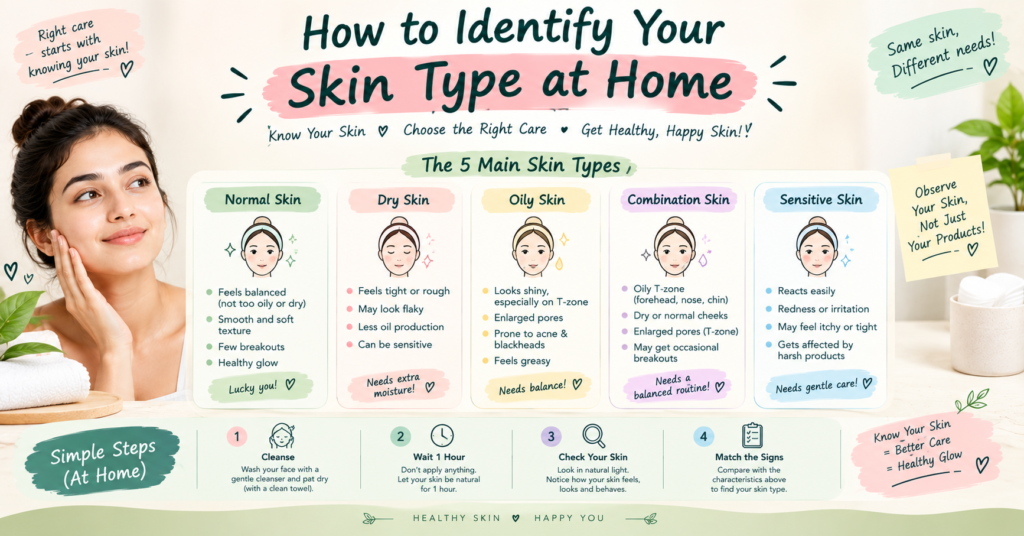
1. Normal Skin
Normal skin generally feels balanced and comfortable. It is not excessively oily or dry.
Common characteristics include:
- Smooth appearance
- Comfortable feel
- Balanced oil production
- Minimal dryness
People with normal skin often follow a simple routine with a cleanser, moisturizer, and sunscreen.
2. Oily Skin
Oily skin produces more natural oil than other skin types.
Common signs include:
- Noticeable shine, especially on the forehead, nose, and chin
- Larger-looking pores
- Skin that may feel oily later in the day
Many people with oily skin prefer lightweight skincare products.
3. Dry Skin
Dry skin usually produces less natural oil and may feel less comfortable after cleansing.
Common characteristics include:
- Tight feeling after washing
- Rough texture
- Dry patches
- Skin that benefits from regular moisturizing
A moisturizer is often an important part of a routine for dry skin.
4. Combination Skin
Combination skin includes both oily and dry areas.
A common pattern is:
- Oily forehead, nose, and chin (T-zone)
- Drier cheeks
Many people with combination skin choose products that work well across different areas of the face.
5. Sensitive Skin
Sensitive skin may react more easily to certain products or environmental conditions.
Common signs can include:
- Feeling of irritation after using some products
- Redness
- Discomfort with certain ingredients
If you think you have sensitive skin, introduce new products gradually and follow the product instructions carefully.
A Simple Skin Type Test You Can Do at Home
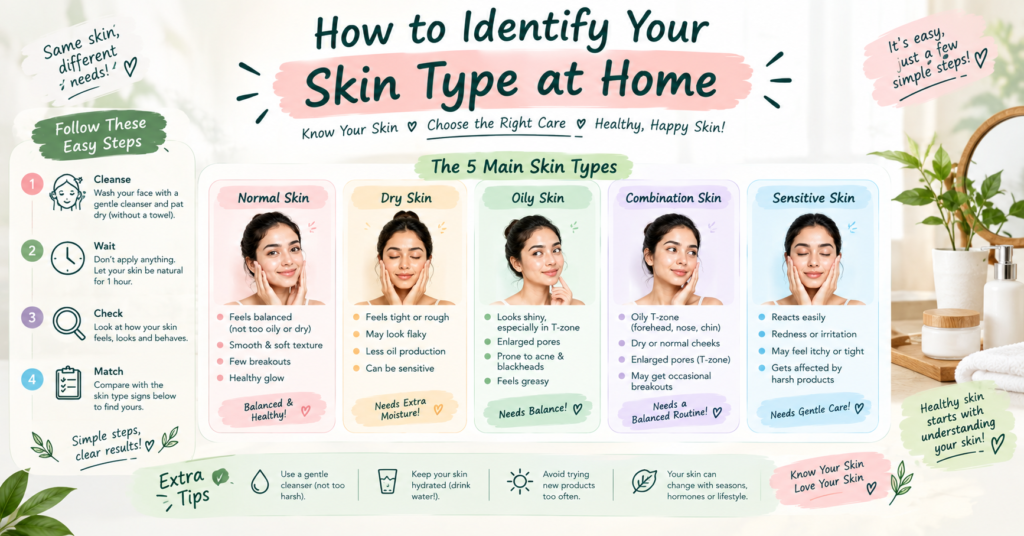
You can perform a basic skin type check at home using these steps.
Step 1: Wash Your Face
Cleanse your face using a gentle cleanser.
Rinse thoroughly and gently pat your skin dry with a clean towel.
Step 2: Don’t Apply Any Products
Avoid applying moisturizer, serum, toner, sunscreen, or makeup.
Leave your skin completely clean.
Step 3: Wait 30–60 Minutes
Allow your skin to rest naturally for about 30 to 60 minutes.
Avoid touching your face during this time.
Step 4: Observe Your Skin
Stand in front of a mirror in natural light and notice how your skin feels and looks.
Ask yourself questions such as:
- Does my skin feel tight?
- Is my forehead shiny?
- Are my cheeks dry?
- Does my entire face feel balanced?
- Are there oily and dry areas at the same time?
Your answers can help you identify the skin type that most closely matches your observations.
Understanding Your Results
If your face feels comfortable without excessive oil or dryness…
Your skin may be normal.
If your forehead, nose, and chin become shiny…
Your skin may be oily.
If your skin feels tight or looks flaky…
Your skin may be dry.
If your T-zone is oily but your cheeks are dry…
Your skin may be combination.
If your skin frequently feels irritated by products…
Your skin may be sensitive.
Remember that this is a simple at-home guide. If you have ongoing concerns about your skin or persistent irritation, consider consulting a qualified dermatologist for professional advice.
Can Your Skin Type Change?
Yes. Your skin may change over time due to factors such as:
- Seasonal weather changes
- Age
- Hormonal changes
- Daily habits
- Environmental conditions
For this reason, it’s a good idea to observe your skin from time to time and adjust your routine if needed.
How to Care for Your Skin Type
Once you have a better understanding of your skin type, the next step is to choose products and build a routine that suits your daily needs. While every person’s skin is unique, these general tips can help you get started.
Caring for Normal Skin
If you have normal skin, focus on maintaining a simple and consistent routine.
A basic routine may include:
- Gentle cleanser
- Moisturizer
- Sunscreen during the day
You can also add optional products such as a toner or serum if they fit your skincare goals and the product instructions.
Caring for Oily Skin
If your skin becomes shiny throughout the day, consider products that feel lightweight and are designed for oily skin.
Helpful habits include:
- Cleanse twice a day according to product directions.
- Choose lightweight moisturizers.
- Use sunscreen suitable for your skin type.
- Avoid over-cleansing, which may leave your skin feeling uncomfortable.
Caring for Dry Skin
Dry skin often benefits from products that help maintain comfort and hydration.
A simple routine may include:
- Gentle cleanser
- Moisturizer after cleansing
- Sunscreen during the day
If you choose to add a serum, follow the product’s instructions for use.
Caring for Combination Skin
Combination skin may require a balanced routine that works well for both oily and drier areas.
General tips include:
- Use a gentle cleanser.
- Apply moisturizer evenly unless the product instructions recommend otherwise.
- Wear sunscreen during the day.
- Introduce new products one at a time.
Caring for Sensitive Skin
If your skin is easily irritated, keep your routine simple and introduce new products gradually.
Helpful tips:
- Read product labels carefully.
- Follow the manufacturer’s instructions.
- Avoid changing multiple products at the same time.
- If irritation persists, seek advice from a qualified dermatologist.
Common Mistakes When Identifying Your Skin Type
It’s easy to misjudge your skin type if you rely on a single observation. Here are a few mistakes to avoid.
1. Checking Your Skin Immediately After Washing
Your skin may temporarily feel different right after cleansing. Waiting 30–60 minutes before evaluating it can give you a more accurate impression.
2. Using Too Many Products Before Testing
Applying moisturizer, serum, or makeup before checking your skin can make it harder to understand how your skin naturally behaves.
3. Assuming Your Skin Type Never Changes
Weather, age, hormones, and lifestyle can influence how your skin feels over time. It’s helpful to reassess your skin occasionally.
4. Choosing Products Without Reading Labels
Before buying a product, review the product description, ingredient information (when available), and usage directions to ensure it aligns with your skincare routine.
Tips for Choosing the Right Skincare Products
Once you know your skin type, shopping becomes easier.
When comparing products, consider:
- Your skin type.
- The product’s purpose.
- Ingredient information (when available).
- Directions for use.
- Customer reviews.
- Brand reputation.
Buying from trusted retailers and reading product descriptions carefully can help you make informed decisions.
Why Choose GlowVera?
At GlowVera, we believe that understanding your skin is the first step toward building a confident skincare routine.
Our collection includes:
- Face Washes
- Cleansers
- Toners
- Face Serums
- Moisturizers
- Sunscreens
- Face Masks
- Lip Care Products
Each product page includes clear descriptions, helpful information, and usage guidance to support your skincare journey.
Whether you’re just starting out or updating your routine, GlowVera offers skincare essentials designed to fit a wide range of skincare preferences.
Final Thoughts
Learning how to identify your skin type at home is an excellent first step toward building a skincare routine that works for you.
By observing how your skin behaves after cleansing, you can gain a better understanding of whether it is normal, oily, dry, combination, or sensitive. This knowledge can make it easier to choose products, simplify your shopping experience, and create a routine you can follow consistently.
Remember that your skin may change over time, so continue paying attention to how it feels in different seasons and stages of life. A simple, consistent routine tailored to your needs is often easier to maintain than a complicated one.
Frequently Asked Questions
1. Can I identify my skin type at home?
Yes. A simple observation after cleansing and waiting 30–60 minutes can provide useful clues about your skin type.
2. How many skin types are there?
The five commonly recognized skin types are normal, oily, dry, combination, and sensitive.
3. Can my skin type change?
Yes. Weather, age, hormonal changes, and lifestyle can all influence how your skin behaves over time.
4. Why is it important to know my skin type?
Knowing your skin type can help you choose products that fit your skincare routine and personal needs.
5. Should I use different products for different skin types?
Many skincare products are designed with specific skin types in mind. Reading product descriptions and following the directions can help you choose suitable options.
6. Can combination skin be both oily and dry?
Yes. Combination skin commonly has an oily T-zone and drier cheeks.
7. Is sensitive skin the same as dry skin?
Not always. Sensitive skin refers to how skin reacts to certain products or conditions, while dry skin relates to lower natural oil levels.
8. How often should I check my skin type?
It’s a good idea to reassess your skin occasionally, especially if you notice changes due to the weather, age, or lifestyle.
9. Can I build a skincare routine after identifying my skin type?
Yes. Knowing your skin type makes it easier to select products and create a simple daily routine.
10. Where can I buy skincare products for my skin type?
You can explore GlowVera’s range of cleansers, serums, moisturizers, sunscreens, toners, face masks, and lip care products to find options that fit your skincare routine.
Find the Right Skincare Products with GlowVera
Now that you know your skin type, you’re ready to build a routine with confidence.
Explore GlowVera’s collection of skincare essentials and discover cleansers, serums, moisturizers, sunscreens, toners, face masks, and lip care products designed to support your everyday skincare routine.
🛒 Shop GlowVera Today and Start Building a Routine That Fits Your Skin!